How to Sell on Etsy with No Money to Start
Learn how to start and grow an Etsy shop with zero upfront cost using simple tools, smart strategies, and beginner-friendly ideas.
SIDE HUSTLE IDEAS
Rachel
4/21/20269 min read
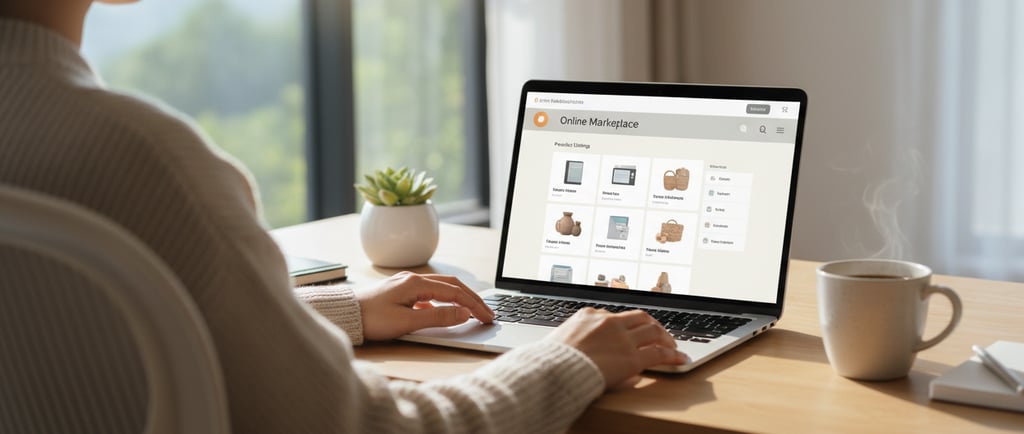
One of the biggest myths about starting an Etsy business is that you need money to make money. You don't — at least not to begin. Thousands of successful Etsy sellers started with nothing more than a free tool, an internet connection, and an idea. Some of them are now earning full-time incomes from shops that cost them absolutely nothing to launch.
This guide shows you exactly how to do the same.
Why Etsy Is One of the Best Zero-Cost Business Opportunities Available
Etsy is unique among online marketplaces because it gives you instant access to a global audience of buyers who are already there, already searching, and already in a purchasing mindset. You don't need to build a website, run ads, or grow a social media following before you make your first sale. The marketplace does the heavy lifting — your job is to show up with the right product.
And unlike physical product businesses that require inventory, manufacturing, or equipment, certain categories on Etsy allow you to start with genuinely zero upfront cost. Your first listing might cost you nothing. Your first sale might arrive before you've spent a single dollar.
Understanding Etsy's Fees Before You Start
Etsy is not completely free to sell on — but the costs are minimal and only kick in when you're already making money, which makes it one of the fairest models for beginners.
Here's what you need to know. Each listing costs $0.20 USD and stays live for four months. When you make a sale, Etsy takes a 6.5 percent transaction fee on the sale price including shipping. If you use Etsy Payments — which most sellers do — there's an additional payment processing fee of around 3 percent plus $0.25 per transaction. There are no monthly subscription fees unless you choose to upgrade to Etsy Plus, which is entirely optional.
The practical takeaway is this: if you're selling digital products, your only upfront cost is $0.20 per listing. Your first listing could cost you twenty cents and turn into hundreds of dollars in sales. That's as close to zero cost as any real business gets.
The Best Products to Sell on Etsy with No Money
Not all Etsy products are created equal when it comes to startup costs. These categories require little to no money to get started.
1. Digital Downloads — The Ultimate Zero-Cost Product
Digital products are the single best option for starting an Etsy shop with no money. You create a file once, list it, and sell it an unlimited number of times with no additional cost per sale. No printing, no shipping, no materials, no inventory. Just a file that lands in the buyer's inbox the moment they pay.
The range of digital products that sell on Etsy is enormous. Printable wall art and home decor prints are among the top sellers — people buy them, download them, and print them at home or at a local print shop. Planners, budget trackers, meal planners, and habit trackers sell consistently all year round. Wedding stationery templates — invitations, save the dates, menus, and place cards — are perennially popular. Business card templates, resume templates, and social media templates sell well to small business owners. Classroom resources and educational worksheets sell to teachers and homeschooling parents. And Canva templates of all kinds — Pinterest graphics, Instagram posts, presentation slides — have become one of the fastest-growing Etsy categories.
The tool you need to create most of these is Canva, which has a free plan that is genuinely powerful enough to produce professional, sale-ready designs. You do not need the paid version to start.
2. Print-on-Demand Products — Physical Products with Zero Inventory
Print-on-demand lets you sell physical products — t-shirts, mugs, tote bags, phone cases, hoodies, posters, cushions — without ever buying, storing, or shipping any stock. You connect a print-on-demand supplier to your Etsy shop, upload your designs, and when a customer orders, the supplier prints and ships directly to them. You never touch the product.
The most popular print-on-demand suppliers that integrate with Etsy are Printful, Printify, and Gelato. All three have free plans with no monthly fees. You only pay the production cost when a sale is made — meaning your supplier fee comes out of the customer's payment before the profit reaches you. Your upfront cost is zero.
The key to succeeding with print-on-demand on Etsy is the same as any other category — niche. A t-shirt that says "funny cat mum" will outsell a generic graphic tee every single time because the right buyer sees it and thinks it was made specifically for them.
3. Handmade Products Using What You Already Have
If you already own craft supplies — yarn, fabric, paint, clay, beads, wood, or any other material — you have inventory. Look around your home before assuming you have nothing to sell with. Handmade jewellery, candles, soap, knitted items, ceramics, art, and home decor all have thriving markets on Etsy.
The listing fee is $0.20. The materials are already yours. Your time and skill are the product. This is one of the most authentic ways to start an Etsy business and many sellers find that what began as a way to sell off existing supplies turns into a full-scale handmade business.
4. Vintage Items You Already Own
Etsy allows sellers to list items that are twenty years or older as vintage. If you have old clothing, jewellery, homewares, books, toys, or collectibles sitting in your home, you may already have an Etsy shop waiting to happen. Vintage items require no creation, no design, and no manufacturing — just a good photo and an accurate description.
5. Craft Supplies and Materials
If you have excess craft supplies — fabric offcuts, buttons, ribbon, beads, stickers, stamps, or paper — you can sell them as craft supplies on Etsy. Buyers actively search for unique and hard-to-find materials for their own projects. What's clutter in your craft room might be exactly what someone else is looking for.
How to Set Up Your Etsy Shop for Free
Opening an Etsy shop costs nothing. Here is the process from start to first listing.
Go to etsy.com and click "Sell on Etsy." Create a free account if you don't already have one. Choose your shop language, country, and currency. Pick your shop name — take time with this as it becomes your brand. Ideally it should be memorable, relevant to what you sell, and available as a username. Set up your first listing with photos, a title, description, pricing, and your $0.20 listing fee. Add your payment and billing information so you can receive payouts. Customise your shop with a banner, profile photo, and About section — all of these are free and all of them build buyer trust.
That's it. Your shop is live and searchable by Etsy's millions of daily visitors from day one.
Creating Professional Product Photos for Free
Photography is one of the most important factors in whether someone clicks on your listing or scrolls past it — and you don't need an expensive camera to do it well. A modern smartphone camera is more than sufficient.
Natural light is your best friend and it costs nothing. Set up near a large window during the day and you'll get clean, bright images that look professional. Use a white piece of card, a light-coloured bedsheet, or a clean section of your floor or desk as a background. Consistency across your photos creates a cohesive shop aesthetic that looks intentional rather than amateur.
For digital products and print-on-demand items, you don't need physical product photos at all. Use free mockup websites like Placeit, Canva's built-in mockup features, or Smartmockups to create realistic lifestyle images of your product. A digital wall art print displayed in a beautiful living room mockup sells significantly better than a flat image of the file itself.
Writing Listings That Actually Get Found
Etsy is a search engine as much as it is a marketplace. When someone types "watercolour botanical print" or "funny dog dad mug" into the search bar, Etsy's algorithm decides whose listings to show. Understanding how to optimise your listings for search is the difference between a shop that gets found and one that sits invisible.
The most important elements are your title, tags, and description. Your title should lead with the most specific, searchable keywords — the exact phrases someone would type to find your product. Use all thirteen available tags and make each one a phrase a real person would search, not just single words. Your description should naturally include your main keywords while also clearly explaining what the buyer is getting, the dimensions or file formats, and anything else they need to know before purchasing.
Research your keywords using Etsy's search bar itself. Type in the first few words of what you're selling and see what autocomplete suggestions appear — these are real searches people are making right now. Build your titles and tags around those exact phrases.
Pricing Your Products Correctly
Pricing is where many new Etsy sellers go wrong — usually by pricing too low in an attempt to attract buyers. Underpricing doesn't just hurt your income, it can actually hurt your sales because buyers associate very low prices with low quality.
For digital products, price based on the value to the buyer rather than the time it took you to create the file. A budget tracker that helps someone save $500 is worth more than $3. Most successful digital download sellers price between $5 and $20 per file with bundles at $15 to $40.
For print-on-demand, your price needs to cover the supplier's production cost, Etsy's fees, and your profit margin. Use your supplier's pricing calculator to work out your base cost and price above it — typically aiming for a 30 to 50 percent profit margin minimum.
For handmade items, the standard formula is materials cost plus your time at a fair hourly rate plus Etsy fees plus your profit margin. Never price handmade items based on what mass-produced equivalents cost — you are selling something unique, made by a real person, with care and skill. Price accordingly.
Free Tools Every Zero-Budget Etsy Seller Needs
Canva free plan is essential for creating digital products, mockups, listing banners, and shop graphics. Erank or Marmalead offer free tiers for Etsy keyword research to help you understand what buyers are searching for. Google Trends is useful for identifying seasonal demand and trending themes in your niche. Placeit and Smartmockups both offer free mockup images for digital and print-on-demand products. Pinterest is a free traffic source that drives significant sales to Etsy shops when used consistently — create a business account, pin your products, and let Pinterest's long-content lifespan work for you.
How to Get Your First Sale Without Paid Advertising
Paid Etsy ads are not necessary when you're starting with no money — and they're not the fastest route to your first sale anyway. Here's what actually works at zero cost.
Optimise every listing for search using the keyword strategy above. Share your listings directly on your personal social media — a genuine post to your friends and followers explaining what you've created costs nothing and can drive immediate traffic. Join Etsy seller communities on Facebook and Reddit where sellers share their shops and advice. Create a Pinterest account and pin every product — Pinterest traffic to Etsy is free, abundant, and has a remarkably long shelf life compared to other social platforms. Ask your first few buyers to leave a review — social proof is one of the most powerful sales drivers on Etsy and it costs nothing.
Your first sale often comes sooner than you expect once your listings are properly optimised and your shop looks complete and trustworthy.
Common Mistakes New Etsy Sellers Make
Opening a shop with only one or two listings is one of the most common early mistakes. Shops with more listings get more exposure in search, look more established to buyers, and give the algorithm more to work with. Aim for at least ten listings before you consider your shop properly open.
Ignoring the shop sections, About page, and shop policies is another frequent error. Buyers look at these before purchasing from a new seller. A complete, detailed shop looks trustworthy. An empty one raises doubts.
Copying other sellers' designs or descriptions — even loosely — is a risk not worth taking. Not only is it ethically wrong, it can result in your shop being suspended. Create original work and write your own descriptions every time.
Giving up too early is perhaps the most expensive mistake of all. Most Etsy shops take two to three months of consistent effort before making regular sales. The sellers who succeed are almost always the ones who kept listing, kept improving, and kept going when early results felt slow.
Realistic Expectations: What Can You Actually Earn?
In your first month, focus on building a complete shop rather than counting sales. Many sellers make their first sale within two to four weeks of opening with a properly optimised shop. Others take longer — it depends on your niche, your listing quality, and the time of year.
By month three to six, sellers who post consistently and keep improving their listings typically earn $100 to $500 per month. Those who treat it seriously, research their market, and expand their product range often reach $500 to $2,000 per month within their first year. Full-time Etsy income — $3,000 to $10,000 per month — is real and achievable but typically takes one to two years of consistent work to build.
The advantage of starting with digital products is that income becomes increasingly passive over time. A set of printables you create this week could still be selling — with no additional effort — three years from now.
Final Thought
You do not need money to start selling on Etsy. You need an idea, a free tool, twenty cents for your first listing, and the willingness to do the work that most people give up on too early.
The barrier to entry is genuinely low. The ceiling is genuinely high. Everything in between is just consistency, learning, and showing up.
Your shop won't build itself — but it also won't cost you anything to start. Open it today.
Low Cost Hustle
Helping people make money online with simple side hustles, practical guides, and free tools.
About
Links
© Low Cost Hustle 2026. All rights reserved.